- For appointment - Urapakkam (+91) 97906 97907 |
- For appointment - Thiruvallur (+91) 9789333005
Glaucoma Treatment in Urapakkam…
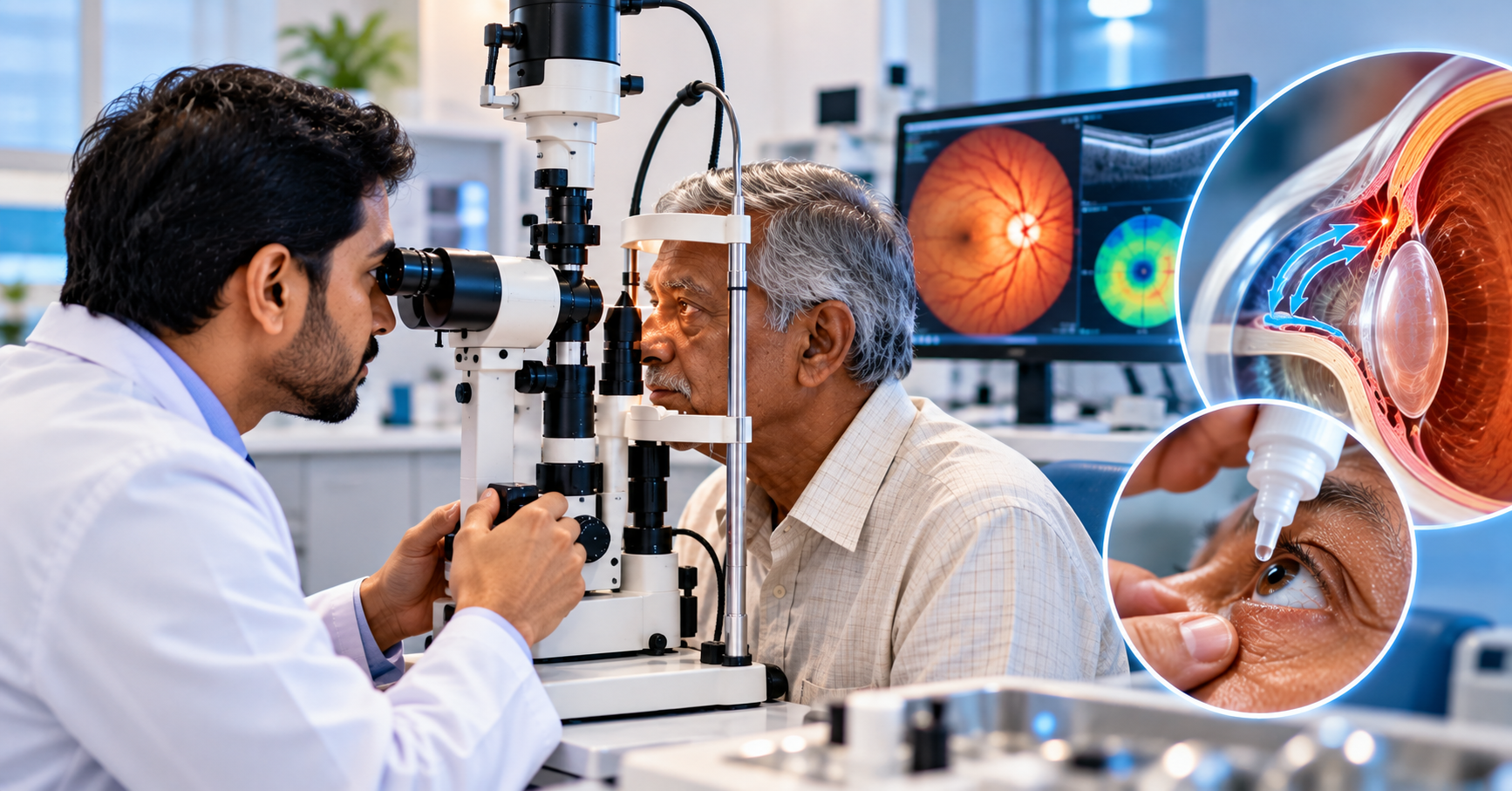
Deepam Eye Hospital in Urapakkam provides eye care for patients seeking evaluation and treatment for glaucoma and other conditions that can affect the optic nerve. Glaucoma is a group of eye conditions that can progressively damage the optic nerve, which carries visual information from the eye to the brain.
One of the important challenges with glaucoma is that vision may remain normal during the early stages. The condition can progress without obvious symptoms, particularly when peripheral vision is affected gradually. Regular eye examinations can therefore help identify changes before significant vision loss develops.
Glaucoma treatment in Urapakkam depends on the type and severity of glaucoma, eye pressure, the condition of the optic nerve and the patient's overall eye health. Treatment may involve monitoring, prescription eye drops, laser procedures or surgery when clinically appropriate.
If you are looking for a glaucoma eye hospital in Urapakkam or glaucoma specialist in Urapakkam, an appropriate eye examination can help determine whether glaucoma is present and what type of care may be required.
What Is Glaucoma?
Glaucoma is a group of eye conditions that can damage the optic nerve and progressively affect vision.
The optic nerve connects the eye to the brain and carries the signals required for sight. When the optic nerve becomes damaged, areas of the visual field can gradually be lost.
Glaucoma is often associated with increased pressure inside the eye, but eye pressure alone does not define every case of glaucoma. Some people can develop optic nerve damage even when their measured eye pressure is within a range considered normal.
This is why a comprehensive glaucoma diagnosis in Urapakkam should assess more than just eye pressure.
Why Is the Optic Nerve Important?
The optic nerve acts as the communication pathway between the eye and the brain.
Light entering the eye is converted into visual information by the retina. This information then travels through the optic nerve to the brain, where it is interpreted as vision.
When glaucoma damages the optic nerve, the affected visual information may no longer reach the brain normally.
Because optic nerve damage can be permanent, identifying glaucoma early and managing it appropriately is an important part of glaucoma care.
How Can Glaucoma Affect Vision?
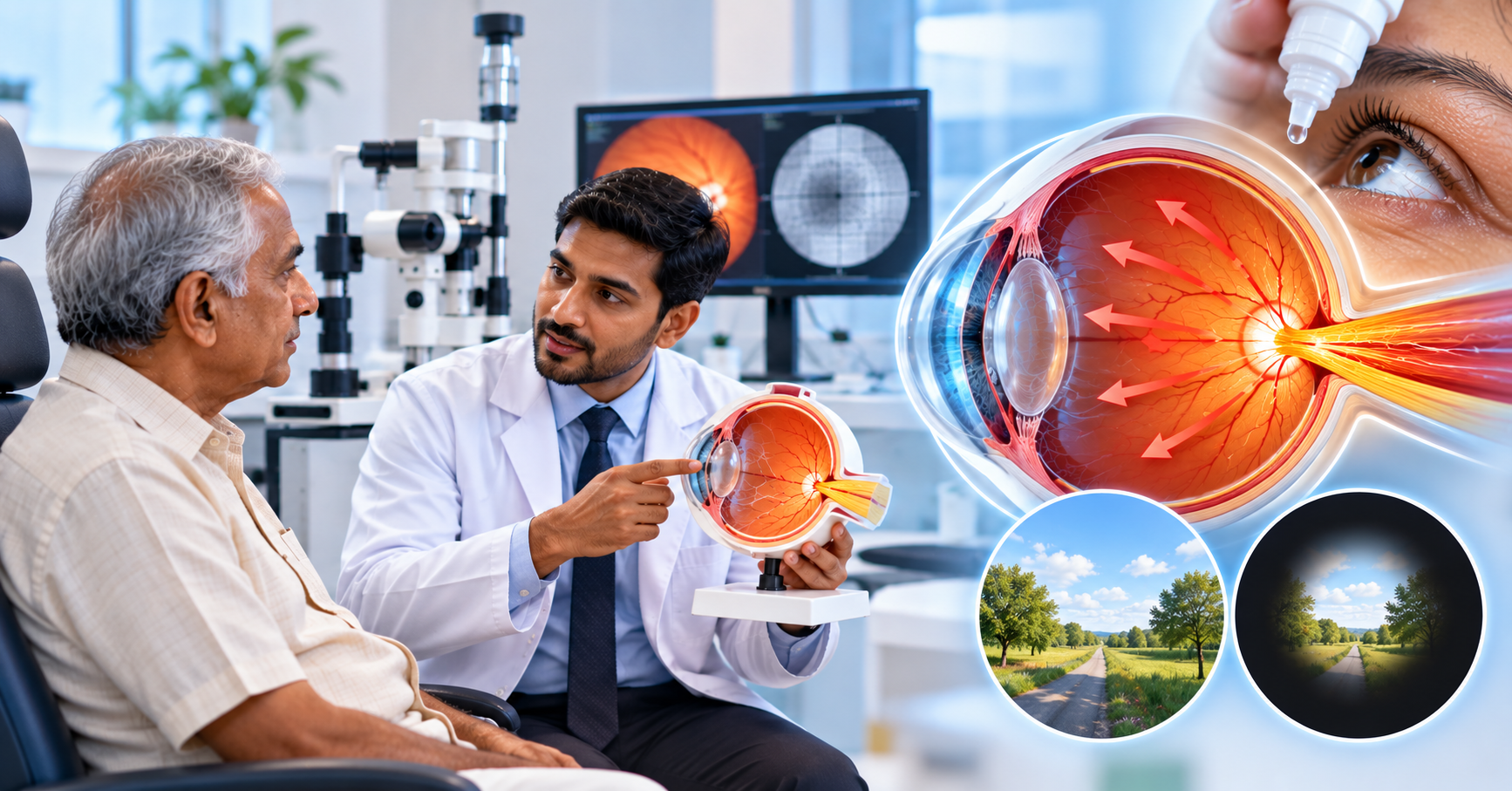
Glaucoma often affects peripheral or side vision first, although the pattern can vary depending on the type and stage of the disease.
A person may not immediately recognise the loss because the brain can adapt to gradual changes in the visual field.
As glaucoma progresses, visual field loss can become more noticeable and may eventually affect central vision.
Possible effects include:
- Difficulty noticing objects at the side
- Problems navigating unfamiliar surroundings
- Reduced visual field
- Difficulty seeing in certain situations
- Advanced loss of useful vision
Once glaucoma-related optic nerve damage has occurred, the lost vision generally cannot simply be restored. This makes early detection and appropriate management particularly important.
Can Glaucoma Develop Without Symptoms?
Yes. Some forms of glaucoma can develop with few or no noticeable symptoms during the early stages.
A person may continue to read, use a phone and perform routine activities while gradual changes are occurring in the peripheral visual field.
This can make glaucoma difficult to recognise without an eye examination.
Regular glaucoma screening in Urapakkam can help assess the health of the optic nerve and identify changes that may require closer monitoring.
What Are the Symptoms of Glaucoma?
Symptoms depend on the type and stage of glaucoma.
Some people with chronic glaucoma may not notice symptoms initially. As the condition progresses, they may experience changes in their visual field.
Possible symptoms can include:
- Gradual reduction in peripheral vision
- Difficulty noticing objects from the side
- Changes in visual field
- Reduced vision in advanced disease
Certain forms of glaucoma can develop much more suddenly.
Severe eye pain, sudden blurred vision, marked redness, halos around lights, headache, nausea or vomiting associated with sudden visual changes require urgent medical assessment.
What Are the Different Types of Glaucoma?
Glaucoma is not a single condition. Different types can have different causes and patterns of progression.
Open-Angle Glaucoma
Open-angle glaucoma is a common form in which the drainage angle of the eye remains open, but fluid does not drain efficiently enough.
This can contribute to increased eye pressure and progressive optic nerve damage.
Because the condition may progress slowly, many people do not notice significant symptoms until visual field loss has developed.
Angle-Closure Glaucoma
Angle-closure glaucoma occurs when the drainage angle becomes narrowed or closed, interfering with the normal movement of fluid out of the eye.
In some cases, this can develop suddenly and cause a rapid increase in eye pressure.
Sudden eye pain, blurred vision, halos around lights, headache, nausea or vomiting can be warning signs requiring urgent ophthalmic assessment.
Normal-Tension Glaucoma
Normal-tension glaucoma can cause optic nerve damage even when measured eye pressure does not appear unusually high.
This demonstrates why measuring eye pressure alone is not sufficient to rule out glaucoma.
The ophthalmologist may consider the appearance of the optic nerve, visual field and other findings when evaluating the condition.
Secondary Glaucoma
Secondary glaucoma develops as a consequence of another eye condition, injury, medication exposure or other underlying factor.
Management may require attention to both the glaucoma and the condition contributing to it.
What Causes Glaucoma?
The underlying cause varies according to the type of glaucoma.
Factors that may be associated with glaucoma include:
- Increased eye pressure
- Age-related changes
- Family history
- Certain structural characteristics of the eye
- Previous eye injury
- Certain eye conditions
- Long-term use of some medications
- Other medical or ocular factors
Having a risk factor does not mean that a person will necessarily develop glaucoma.
A comprehensive eye examination is needed to assess the individual's actual risk and eye health.
Who May Have a Higher Risk of Glaucoma?
Certain people may have a greater risk of developing glaucoma.
Risk can be associated with:
- Increasing age
- Family history of glaucoma
- Previous eye injury
- Certain eye conditions
- Certain medical conditions
- Long-term use of some medications
- Particular anatomical characteristics of the eye
People with known risk factors may benefit from discussing an appropriate eye examination schedule with an ophthalmologist.
Is High Eye Pressure the Same as Glaucoma?
No. High eye pressure and glaucoma are not exactly the same thing.
Some people may have elevated intraocular pressure without developing optic nerve damage. This can be referred to as ocular hypertension.
Conversely, some patients can develop glaucoma-related optic nerve damage without having unusually high measured eye pressure.
Therefore, glaucoma screening in Urapakkam should involve assessment of the optic nerve and visual function rather than relying on eye pressure alone.
How Is Glaucoma Diagnosed?
Glaucoma diagnosis involves assessing the optic nerve, visual function and other relevant characteristics of the eye.
The ophthalmologist may evaluate:
- Intraocular pressure
- Optic nerve appearance
- Visual field
- Corneal characteristics where relevant
- Drainage angle
- Retinal and optic nerve structures
- Changes over time
Additional tests may be recommended depending on the patient's age, symptoms, risk factors and examination findings.
The purpose is to determine whether glaucoma is present, assess its severity and establish an appropriate monitoring or treatment plan.
What Is a Glaucoma Eye Pressure Test?
Eye pressure measurement, also known as intraocular pressure assessment, is one part of a glaucoma evaluation.
The test helps the ophthalmologist understand the pressure inside the eye.
However, pressure readings need to be interpreted alongside other findings because glaucoma can occur at different pressure levels.
A single eye pressure measurement therefore cannot independently confirm or exclude glaucoma.
What Is a Visual Field Test?
A visual field test assesses how well a person can detect objects at different points within their field of vision.
This can help identify areas where vision may have been affected by optic nerve damage.
Visual field testing can be particularly useful for:
- Establishing a baseline
- Detecting functional changes
- Monitoring known glaucoma
- Assessing progression over time
The results are interpreted together with the patient's other examination findings.
Why Is the Optic Nerve Exam Important?
The optic nerve provides important information about the health of the eye.
During a glaucoma assessment, the ophthalmologist may examine the appearance of the optic nerve for structural changes that could be associated with glaucoma.
This examination becomes especially useful when considered alongside eye pressure measurements and visual field findings.
Monitoring structural changes over time can help the ophthalmologist understand whether the condition is stable or progressing.
Can Glaucoma Be Detected Early?
Yes. Glaucoma can sometimes be identified before a patient notices significant vision changes.
Early detection is particularly valuable because glaucoma-related optic nerve damage can be permanent.
A glaucoma checkup in Urapakkam can help assess risk factors, eye pressure, optic nerve health and visual function.
If abnormalities are detected, the ophthalmologist can determine whether the patient needs observation, additional testing or treatment.
Why Should High-Risk Patients Have Regular Glaucoma Checkups?
People with risk factors for glaucoma may require regular eye examinations even when their eyesight appears normal.
Monitoring can help identify:
- Changes in eye pressure
- Optic nerve abnormalities
- Visual field changes
- Structural progression
- Other eye conditions
The appropriate examination frequency varies according to the patient's age, risk factors, existing glaucoma and previous findings.
Can Glaucoma Cause Permanent Vision Loss?
Yes. Advanced glaucoma can cause permanent vision loss because damage to the optic nerve cannot generally be reversed.
This does not mean that every person with glaucoma will lose significant vision.
Early diagnosis, appropriate treatment and continued monitoring can help manage the condition and protect remaining vision.
Patients should therefore continue their recommended glaucoma care even when their current eyesight appears stable.
When Should You Seek Glaucoma Care?
An eye examination may be appropriate if you:
- Have a family history of glaucoma
- Have been told that your eye pressure is high
- Notice changes in your peripheral vision
- Have experienced an eye injury
- Have another eye condition associated with glaucoma
- Use certain long-term medications that may affect eye pressure
- Have previously been diagnosed with glaucoma
Sudden severe eye pain, redness, blurred vision, halos around lights, headache, nausea or vomiting with visual symptoms require urgent medical attention.
Glaucoma Treatment in Urapakkam: Why Evaluation Comes First
If you are searching for glaucoma treatment in Urapakkam, the first step is understanding whether glaucoma is present and, if so, what type and stage of disease is involved.
The clinical pathway may involve:
Risk assessment
Glaucoma examination
Diagnosis
Severity assessment
Monitoring or treatment plan
Different patients can require different approaches.
Some may need regular observation, while others may require medication, laser treatment or surgery depending on their individual condition.
Glaucoma Care at Deepam Eye Hospital, Urapakkam
Deepam Eye Hospital in Urapakkam provides eye care for patients seeking assessment and management of glaucoma-related concerns.
If you are looking for glaucoma treatment in Urapakkam, glaucoma screening in Urapakkam or an eye hospital for glaucoma in Urapakkam, an ophthalmic evaluation can help determine the condition of your eyes and the appropriate next step.
The goal of glaucoma care is not simply to measure eye pressure. It is to understand the health of the optic nerve, identify changes in visual function and develop an appropriate monitoring or treatment plan.
How Is Glaucoma Treatment Planned?
Glaucoma treatment is planned according to the type of glaucoma, optic nerve condition, eye pressure, visual field findings and the individual patient's eye health.
The aim is generally to control factors contributing to optic nerve damage and preserve the vision that remains. Treatment does not follow one identical pathway for every patient.
Depending on the clinical findings, the ophthalmologist may recommend:
- Prescription eye drops
- Regular observation
- Laser treatment
- Glaucoma surgery
- A combination of treatments
- Ongoing monitoring of eye pressure and visual function
The treatment plan may also change over time if the glaucoma progresses or the patient's response to treatment changes.
What Is the Main Goal of Glaucoma Treatment?
The main goal of glaucoma treatment is to protect the optic nerve and preserve remaining vision.
Glaucoma-related optic nerve damage cannot generally be reversed once it has occurred. Treatment therefore focuses on controlling the disease and reducing the likelihood of further damage.
The appropriate target for eye pressure is individual to each patient. The ophthalmologist considers the extent of optic nerve damage and other clinical findings when establishing the treatment approach.
Glaucoma Eye Drops
Prescription eye drops are commonly used as an initial treatment for many forms of glaucoma.
Depending on the medicine, glaucoma eye drops can help reduce the production of fluid inside the eye or improve its drainage. This can help lower intraocular pressure.
Different types of glaucoma medicines work in different ways, and one medicine may not be suitable for every patient.
The ophthalmologist selects the medication according to the patient's condition and may change the treatment if the response is inadequate or side effects occur.
Why Is Correct Use of Glaucoma Eye Drops Important?
Glaucoma treatment often requires consistent use of prescribed medication.
Missing doses or stopping eye drops without medical advice can allow eye pressure to rise and may increase the risk of further optic nerve damage.
Patients should:
- Use the prescribed dose
- Follow the recommended schedule
- Avoid stopping medication independently
- Tell the ophthalmologist about side effects
- Attend scheduled follow-up appointments
If several eye drops are prescribed, the patient should follow the specific instructions provided by the treating eye specialist.
Can More Than One Glaucoma Eye Drop Be Required?
Yes. Some patients may require more than one glaucoma medication to achieve the desired level of eye pressure control.
The ophthalmologist may use medicines with different mechanisms when a single medication does not provide adequate control.
The number of medicines required can change over time depending on:
- Eye pressure
- Optic nerve status
- Visual field findings
- Disease progression
- Response to treatment
- Medication tolerance
Treatment should therefore be reviewed periodically rather than continued indefinitely without assessment.
What Is Laser Treatment for Glaucoma?
Laser treatment uses focused laser energy to improve the management of certain types of glaucoma.
The specific laser technique depends on the type of glaucoma and the condition of the eye.
Laser treatment may be considered when medication alone does not provide adequate control, when a particular type of glaucoma is present or when the ophthalmologist believes it is an appropriate treatment option.
Not every patient with glaucoma is a candidate for laser treatment.
When May Glaucoma Laser Treatment Be Considered?
Laser treatment can be considered in selected patients based on the type and mechanism of glaucoma.
The ophthalmologist may consider factors such as:
- Eye pressure
- Drainage angle
- Type of glaucoma
- Response to medication
- Optic nerve condition
- Previous treatment
- Overall eye health
The purpose and expected outcome of the laser procedure should be explained to the patient before treatment.
What Is Glaucoma Surgery?
Glaucoma surgery involves procedures designed to improve the control of fluid and pressure within the eye when other treatment approaches are insufficient or unsuitable.
Different surgical techniques are available, and the appropriate procedure depends on the type and severity of glaucoma.
Surgery may be considered when:
- Eye pressure remains inadequately controlled
- Optic nerve damage continues to progress
- Medication is insufficient or poorly tolerated
- Laser treatment is unsuitable or unsuccessful
- The clinical condition indicates a need for surgical management
The decision should be based on an individual ophthalmic assessment.
What Types of Glaucoma Surgery Are Available?
There are different surgical approaches to glaucoma, and they are not interchangeable.
Depending on the patient's condition, the ophthalmologist may consider procedures designed to:
- Improve the natural drainage of fluid
- Create an alternative pathway for fluid drainage
- Reduce fluid production within the eye
- Address specific anatomical causes of increased eye pressure
The choice depends on the type of glaucoma, previous treatments, severity of optic nerve damage and other eye characteristics.
Patients considering glaucoma surgery in Urapakkam should discuss the specific procedure being recommended and why it is appropriate for their condition.
When Might Glaucoma Surgery Be Recommended?
Surgery is generally considered when the ophthalmologist determines that the risk of continued optic nerve damage is significant and other suitable approaches are insufficient or inappropriate.
Possible reasons for considering surgery include:
- Persistent eye pressure despite medication
- Progressive optic nerve damage
- Worsening visual field changes
- Difficulty tolerating prescribed medicines
- Inadequate response to previous treatment
- Certain advanced or complicated forms of glaucoma
Surgery is not automatically required simply because a person has glaucoma.
Can Glaucoma Surgery Restore Lost Vision?
Glaucoma surgery is generally intended to control the disease and protect remaining vision rather than restore optic nerve damage that has already occurred.
If glaucoma has already caused permanent visual field loss, surgery cannot normally reverse that established damage.
The purpose of treatment is to reduce the risk of additional damage by controlling the disease appropriately.
This is one reason early diagnosis and continued glaucoma monitoring are important.
What Happens Before Glaucoma Surgery?
Before glaucoma surgery, the ophthalmologist reviews the patient's eye condition and previous treatment.
The assessment may consider:
- Type of glaucoma
- Current eye pressure
- Optic nerve status
- Visual field results
- Previous medicines
- Previous laser procedures
- Previous eye surgeries
- Other eye conditions
- General medical history
The patient can also discuss the expected procedure, possible risks, postoperative care and follow-up requirements before surgery.
What Happens After Glaucoma Surgery?
Postoperative care depends on the type of glaucoma procedure performed.
Follow-up may involve:
- Checking eye pressure
- Examining the operated eye
- Assessing healing
- Reviewing prescribed medicines
- Monitoring the optic nerve and visual function
- Identifying postoperative complications
Patients should use postoperative medicines exactly as instructed and attend the recommended follow-up visits.
Why Is Follow-Up Important After Glaucoma Treatment?
Glaucoma requires ongoing monitoring because controlling eye pressure at one point in time does not necessarily mean the disease has permanently stopped progressing.
Follow-up allows the ophthalmologist to compare current findings with previous examinations.
Monitoring may include:
- Eye pressure assessment
- Optic nerve examination
- Visual field testing
- Structural assessment where appropriate
- Review of medication
- Assessment of treatment response
The frequency of follow-up depends on the severity and stability of the patient's glaucoma.
What Happens If Glaucoma Treatment Is Not Followed Regularly?
Glaucoma can progress gradually, sometimes without obvious symptoms.
If prescribed treatment is not followed or scheduled examinations are repeatedly missed, changes in eye pressure or optic nerve health may go undetected.
Patients should therefore:
- Take prescribed medicines consistently
- Attend follow-up appointments
- Report medication side effects
- Inform the ophthalmologist about changes in vision
- Avoid stopping glaucoma treatment without medical advice
Consistent care is particularly important because established optic nerve damage cannot generally be reversed.
Can Glaucoma Be Managed Long Term?
Yes. Many patients with glaucoma require long-term monitoring and treatment to maintain control of the disease.
Long-term management may involve medication, laser treatment, surgery or combinations of these approaches.
The treatment plan can change throughout a patient's life depending on disease progression, eye pressure, treatment response and other health factors.
Regular review allows the ophthalmologist to adjust management when necessary.
Living With Glaucoma
A glaucoma diagnosis does not necessarily mean that a person will immediately experience major vision problems.
With appropriate monitoring and treatment, the focus is on maintaining the best possible visual function and preventing avoidable progression.
Patients can support their ongoing eye care by:
- Following their medication schedule
- Attending regular examinations
- Keeping their ophthalmologist informed about new symptoms
- Carrying their medication when travelling
- Understanding their treatment plan
- Avoiding self-adjustment of prescribed medicines
Glaucoma management is a continuing process rather than a one-time procedure.
Can Glaucoma Treatment Have Side Effects?
Yes. Different glaucoma medicines, laser procedures and surgeries can have potential side effects or complications.
The nature and likelihood of these effects depend on the treatment used.
Patients should discuss:
- Expected short-term effects
- Potential complications
- Medication-related side effects
- Warning signs requiring medical attention
- Postoperative restrictions
with their treating ophthalmologist.
Any unexpected or significant change after treatment should be reported promptly.
What Should You Do If Glaucoma Eye Drops Cause Irritation?
Mild irritation can occur with some eye medications, but patients should not automatically stop treatment.
If you experience persistent discomfort, significant redness, swelling, visual changes or other concerning symptoms, contact the treating ophthalmologist.
The doctor can determine whether the symptoms are medication-related and whether the treatment needs to be adjusted.
What Happens If Eye Pressure Remains High Despite Treatment?
If eye pressure remains above the patient's desired target despite treatment, the ophthalmologist may reassess the diagnosis and current management.
Depending on the situation, the doctor may consider:
- Adjusting medication
- Adding another medication
- Laser treatment
- Surgical treatment
- Closer monitoring
The appropriate response depends on the individual's optic nerve status and risk of further damage.
Glaucoma Treatment in Urapakkam: A Continuing Care Pathway
Glaucoma management is best viewed as an ongoing process:
Diagnosis
Treatment planning
Pressure control
Monitoring
Treatment adjustment when required
Long-term follow-up
The treatment pathway can differ significantly between patients.
Some may remain stable with prescription eye drops, while others may require laser treatment or surgery to achieve appropriate disease control.
Choosing Glaucoma Care in Urapakkam
Patients searching for a glaucoma treatment hospital in Urapakkam should consider the importance of both diagnosis and long-term follow-up.
During a glaucoma consultation, patients can discuss:
- Their type of glaucoma
- Current eye pressure
- Optic nerve findings
- Available treatment options
- Medication requirements
- Whether laser or surgery is appropriate
- Follow-up expectations
A personalised treatment plan allows management to be based on the patient's actual eye condition rather than applying the same approach to everyone.
What Should You Consider When Choosing Glaucoma Care in Urapakkam?
When searching for a glaucoma hospital in Urapakkam, patients should look beyond the procedure itself and understand the complete care pathway.
Important areas to discuss during a consultation include:
- Whether glaucoma is present
- The type and severity of glaucoma
- Current eye pressure
- Optic nerve findings
- Visual field status
- Available treatment options
- Expected follow-up
- Potential treatment-related risks
- Whether treatment needs to be adjusted over time
This helps patients understand their diagnosis and make informed decisions with their ophthalmologist.
Glaucoma Treatment Approach at a Glance
Glaucoma Findings and Management at a Glance
| Glaucoma Finding or Situation | What the Ophthalmologist May Assess | Possible Management |
|---|---|---|
| No confirmed glaucoma but increased risk | Eye pressure, optic nerve and other risk factors | Periodic glaucoma monitoring |
| Established glaucoma with controlled findings | Eye pressure, optic nerve and visual field | Continued prescribed treatment and follow-up |
| Eye pressure not adequately controlled | Response to current medication and disease status | Medication adjustment or additional treatment may be considered |
| Suitable glaucoma requiring laser intervention | Type of glaucoma and eye anatomy | Laser treatment may be considered |
| Progressive or advanced disease | Optic nerve damage, pressure control and previous treatment | Surgical treatment may be considered |
| Long-term glaucoma management | Changes in pressure, optic nerve and visual field | Ongoing monitoring and treatment adjustment |
The appropriate treatment is determined by the ophthalmologist after evaluating the patient's individual eye condition. Not every patient with glaucoma requires laser treatment or surgery.
Dr. Vimala Karunanithi
Consultant Ophthalmologist
Dr. Vimala Karunanithi is a Consultant Ophthalmologist with areas of interest including:
Areas of Interest
Her interest in glaucoma is relevant to patients seeking assessment and management of glaucoma-related eye concerns. Patients can discuss their symptoms, previous eye reports and examination findings to understand their individual eye-care requirements.
Additional claims regarding years of experience, specific surgical expertise, awards or professional memberships should only be added if officially verified by Deepam Eye Hospital.
Glaucoma Care Is More Than an Eye Pressure Check
A glaucoma assessment should not rely on a single eye pressure reading.
The ophthalmologist may consider several aspects together, including:
Eye pressure
optic nerve health
visual field
eye anatomy
changes over time
Looking at these findings together can provide a more complete understanding of the patient's glaucoma status.
This is particularly important because some patients can develop optic nerve damage without markedly elevated eye pressure.
When Should You Revisit Your Eye Specialist?
Patients already receiving glaucoma treatment should continue follow-up according to the schedule recommended by their ophthalmologist.
An earlier review may be appropriate if there is:
- A noticeable change in vision
- Increasing difficulty with peripheral vision
- Problems using prescribed eye drops
- Significant eye irritation after medication
- New eye pain or redness
- Difficulty following the treatment schedule
- Any unexpected change after laser or surgery
Do not independently stop or change prescribed glaucoma medication.
Quick Answers — Glaucoma Treatment in Urapakkam
What is glaucoma treatment?
Glaucoma treatment aims to control factors associated with optic nerve damage and preserve remaining vision. Depending on the condition, treatment may involve eye drops, laser treatment, surgery or regular monitoring.
Where can I get glaucoma treatment in Urapakkam?
Patients searching for glaucoma treatment in Urapakkam can consult Deepam Eye Hospital for ophthalmic evaluation and discussion of appropriate glaucoma management.
Does glaucoma always cause symptoms?
No. Some forms of glaucoma can progress gradually without noticeable symptoms, particularly during the early stages.
Can glaucoma be treated with eye drops?
Yes. Prescription eye drops are commonly used to manage many forms of glaucoma. The appropriate medication depends on the patient's condition.
When is glaucoma surgery considered?
Glaucoma surgery may be considered when eye pressure remains inadequately controlled, disease progression continues or other suitable treatment approaches are insufficient or inappropriate.
Can glaucoma surgery restore lost vision?
Glaucoma surgery is primarily intended to control the disease and protect remaining vision. Established optic nerve damage and associated permanent visual field loss generally cannot be reversed.
Is high eye pressure always glaucoma?
No. Some people have elevated eye pressure without optic nerve damage, while glaucoma can also occur at apparently normal pressure levels.
Why are regular glaucoma checkups important?
Regular examinations allow the ophthalmologist to monitor eye pressure, optic nerve health and visual function and identify changes that may require treatment adjustment.
Can glaucoma affect both eyes?
Yes. Glaucoma can affect both eyes, although the severity and rate of progression may differ between them.
Who should I consult for glaucoma?
An ophthalmologist can evaluate the eyes, assess glaucoma risk or existing disease and recommend appropriate monitoring or treatment.
Frequently Asked Questions About Glaucoma Treatment in Urapakkam
Glaucoma is generally managed as a long-term eye condition rather than cured through a single treatment. Appropriate management focuses on controlling the disease and protecting remaining vision.
No. Do not stop prescribed glaucoma medication without discussing it with your ophthalmologist. A normal pressure reading may reflect the effect of the treatment.
The interval depends on the type and severity of glaucoma, treatment response and previous examination findings. Your ophthalmologist will determine an appropriate follow-up schedule.
Yes. Some patients can develop glaucomatous optic nerve damage even when measured eye pressure is not unusually high.
Untreated progressive glaucoma can cause increasing optic nerve damage and permanent visual field loss. Early assessment and appropriate management are therefore important.
No. Surgery is considered only when the patient's clinical condition indicates that it may be beneficial or when other suitable approaches are insufficient or inappropriate.
Appropriate treatment can help control glaucoma and reduce the risk of further damage, although the outcome varies between individuals.
A visual field test helps assess how well a person detects objects across different areas of their field of vision and can help monitor functional changes associated with glaucoma.
Yes. Certain eye injuries can contribute to secondary glaucoma. Anyone with a previous significant eye injury should discuss appropriate eye monitoring with an ophthalmologist.
Patients looking for a glaucoma checkup in Urapakkam can consult Deepam Eye Hospital for an ophthalmic assessment and discussion of their glaucoma-related concerns.
Book a Glaucoma Consultation in Urapakkam
Glaucoma may progress quietly, making regular eye assessment important even when vision appears stable.
If you are looking for glaucoma treatment in Urapakkam, glaucoma screening in Urapakkam, or an eye hospital for glaucoma in Urapakkam, Deepam Eye Hospital can be considered for professional ophthalmic evaluation and treatment planning.
Book an eye consultation to understand your glaucoma risk, current eye health and appropriate next step with the treating ophthalmologist.
Contact UsMedical Disclaimer
This page provides general educational information about glaucoma and its management. It does not replace an individual eye examination, diagnosis or medical advice. The choice between monitoring, medication, laser treatment or surgery should be determined by the treating ophthalmologist based on the patient's eye pressure, optic nerve condition, visual field and overall clinical findings.
