- For appointment - Urapakkam (+91) 97906 97907 |
- For appointment - Thiruvallur (+91) 9789333005
Pediatric Eye Care in Thiruvallur
Pediatric eye care in Thiruvallur focuses on identifying and managing eye and vision problems in children while their visual system is still developing.
Children may not always realise or communicate that they are having difficulty seeing. A child may adapt to reduced vision in one eye without complaining, making regular vision assessment particularly important.
Pediatric eye care can help identify problems such as:
- Refractive errors
- Amblyopia or lazy eye
- Squint or strabismus
- Unequal vision between the eyes
- Childhood cataract
- Eyelid problems
- Eye movement disorders
- Other conditions affecting visual development
Early identification of certain childhood eye problems can provide an opportunity for treatment while vision is still developing.
Why Is Eye Care Important for Children?
Vision plays an important role in a child's development and everyday activities.
Clear vision helps children with:
- Reading
- Writing
- Classroom activities
- Hand-eye coordination
- Sports
- Recognising people and objects
- Understanding distances
- Everyday movement and exploration
Some childhood eye problems may have few obvious symptoms.
A child may continue normal activities even when one eye has poorer vision than the other. This is one reason parents should not rely only on whether the child complains about their eyesight.
When Should a Child Have an Eye Examination?
Eye assessment can be appropriate at different stages of childhood, particularly when there are concerns about visual development or risk factors for eye disease.
An examination may be especially important when:
- A child has difficulty seeing the board
- The child frequently squints
- One eye appears to turn
- The child holds books or screens unusually close
- There is frequent head tilting
- Reading causes discomfort
- One eye appears to be weaker
- There is a family history of childhood eye problems
- A child has already failed a vision screening
Age-appropriate vision screening and comprehensive eye assessment help identify children who may need further evaluation.
Signs That May Suggest a Vision Problem
Parents may notice certain behaviours when a child is having difficulty seeing.
These can include:
- Squinting frequently
- Closing one eye while looking at something
- Sitting very close to the television
- Holding books unusually close
- Tilting the head
- Frequent eye rubbing
- Difficulty following objects
- Avoiding reading
- Losing their place while reading
- Difficulty recognising objects from a distance
- Poor performance in visually demanding activities
These signs do not always mean that the child has an eye disease, but persistent changes should be assessed.
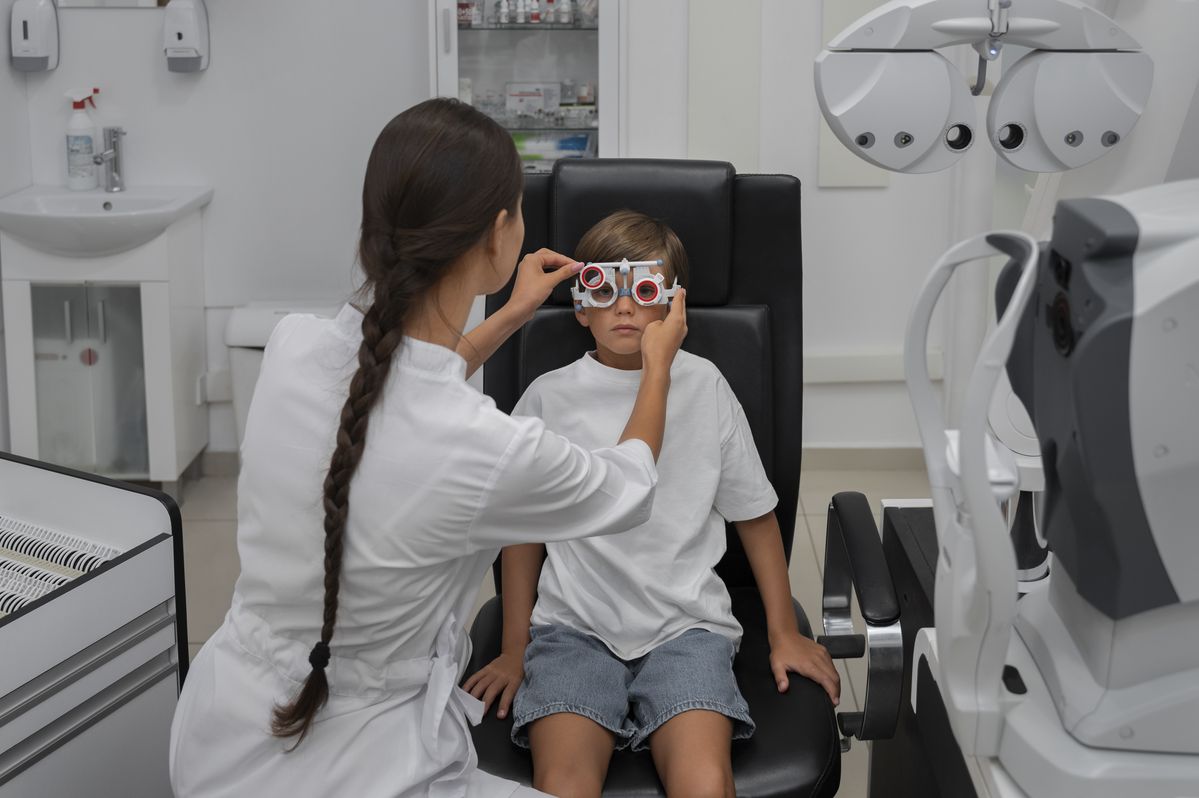
Children's Vision Screening in Thiruvallur
Vision screening is intended to identify children who may have a vision problem and require a more complete eye examination.
Screening may help identify risk factors associated with:
- Amblyopia
- Significant refractive error
- Strabismus
- Unequal refractive power
- Other eye abnormalities
A screening result is not the same as a complete diagnosis. Children who do not pass screening may require a comprehensive assessment to determine the underlying problem.
Pediatric Eye Examination in Thiruvallur
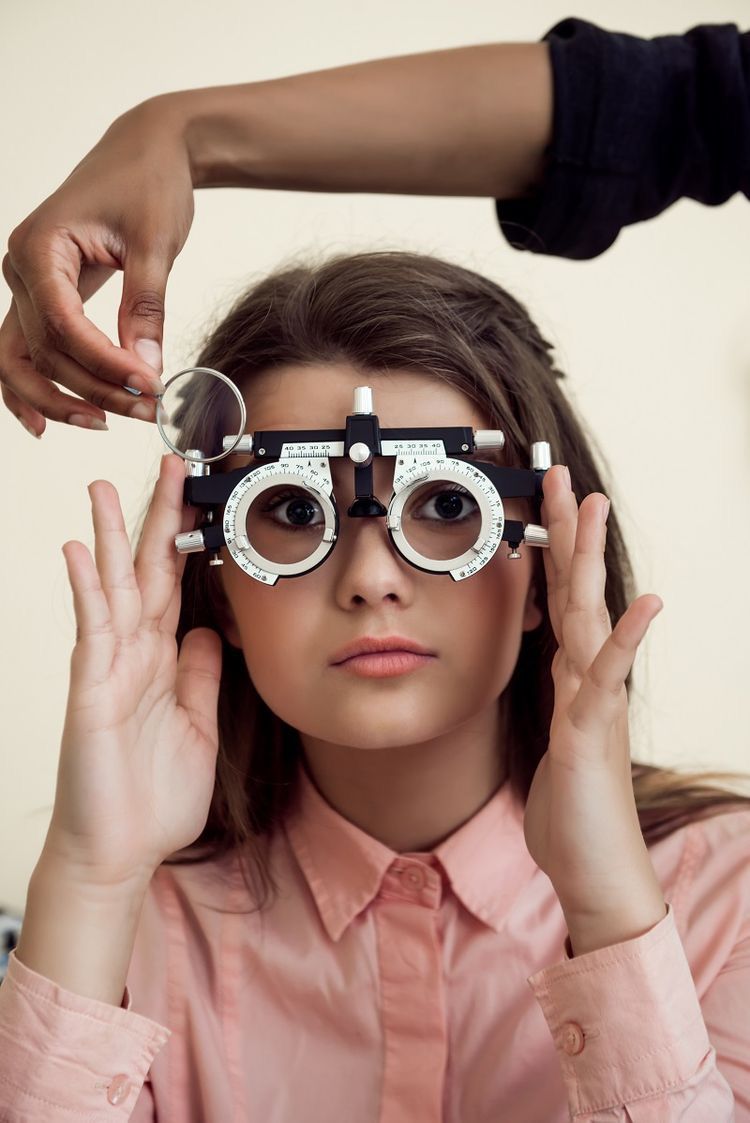
A child's eye examination is adapted according to age and ability to cooperate.
Depending on the child, the assessment may include:
- Visual acuity testing
- Eye alignment assessment
- Eye movement evaluation
- Refraction
- Assessment of binocular vision
- Examination of the front of the eye
- Retinal examination
- Dilated examination when indicated
For children who are too young to provide reliable responses on a conventional vision chart, age-appropriate assessment methods may be used.
Why Can Children Need Glasses?
Children may require spectacles when they have a refractive error that affects clear vision.
Common refractive errors include:
Myopia
Myopia can make distant objects appear blurred.
A child with myopia may have difficulty seeing:
- The classroom board
- Signs at a distance
- Objects across a playground
- Television from a distance
Hyperopia
Hyperopia can affect focusing, particularly for near tasks, depending on its degree and the child's age.
Astigmatism
Astigmatism can cause blurred or distorted vision because of an irregular focusing pattern.
Unequal Power Between the Eyes
A significant difference in prescription between the two eyes can affect visual development and may contribute to amblyopia if not appropriately managed.
Children's Spectacles in Thiruvallur
When a child needs glasses, selecting the correct prescription is only one part of successful spectacle use.
Children's spectacles should also provide:
- Appropriate frame size
- Comfortable fit
- Secure positioning
- Suitable lens material
- Durability
- Ease of handling
A frame that is too large, too tight or uncomfortable may make it difficult for a child to wear spectacles consistently.
What Is Amblyopia or Lazy Eye?
Amblyopia, commonly called lazy eye, is reduced vision caused by abnormal visual development during childhood.
It can occur when the brain does not receive or use a clear visual signal from one eye or, less commonly, both eyes.
Possible causes include:
- Significant refractive error
- Different prescriptions between the eyes
- Strabismus
- Cataract or another condition blocking clear vision
Amblyopia may be difficult for parents to notice because the child may see adequately with the stronger eye.
Why Does Early Treatment of Amblyopia Matter?
Vision develops during childhood.
When amblyopia is identified early, treatment can help encourage the brain to use the weaker eye.
Depending on the cause, treatment may involve:
- Corrective spectacles
- Treatment of the underlying eye condition
- Patching the stronger eye
- Prescription eye drops in selected cases
- Other treatment when clinically required
The exact treatment depends on the child's age, cause and severity of amblyopia.
What Is Squint or Strabismus?
Strabismus, commonly called squint, occurs when the eyes are not properly aligned.
One eye may turn:
- Inward
- Outward
- Upward
- Downward
The eye deviation may be constant or may occur only at certain times.
Some children with strabismus may have difficulty developing normal binocular vision and may also develop amblyopia.
Does Every Child With a Squint Need Surgery?
No.
Treatment depends on the cause, type and severity of the eye misalignment.
Management may involve:
- Observation in selected cases
- Spectacles
- Treatment of amblyopia
- Other non-surgical measures
- Squint surgery when clinically indicated
A proper examination is necessary before deciding whether surgery is appropriate.
What Is Myopia in Children?
Childhood myopia causes difficulty seeing distant objects clearly.
Parents may notice that a child:
- Moves closer to the television
- Cannot see the classroom board clearly
- Squints to see distant objects
- Avoids activities requiring distance vision
An eye examination can determine whether the child requires spectacles or other management.
Why Should Childhood Myopia Be Monitored?
Myopia can change as a child grows.
A child who already wears spectacles may therefore require periodic assessment to determine whether the prescription has changed.
Regular follow-up allows the ophthalmologist to monitor the child's vision and decide whether additional management is appropriate.
Children's Eye Care and School Performance
Vision does not determine academic ability, but uncorrected visual problems can make visually demanding school tasks more difficult.
A child with an uncorrected refractive error may experience difficulty with:
- Reading from the board
- Reading books
- Copying written work
- Sustaining visual attention
- Participating in classroom activities
If a child is struggling with schoolwork, vision should be considered as one possible factor rather than assuming that the problem is purely academic.
Pediatric Eye Care for Infants
Eye concerns can occur even before a child is old enough to communicate visually.
Parents should seek an eye assessment if they notice:
- An unusual appearance of the pupil
- Persistent eye misalignment
- Abnormal eye movements
- Drooping eyelid
- Significant difference between the two eyes
- Poor visual response
- An unusual white reflection in the pupil
An abnormal red reflex or unusual pupil appearance in an infant warrants prompt medical evaluation.
Pediatric Eye Care for School-Age Children
School-age children may benefit from eye assessment when they experience:
- Difficulty seeing the board
- Reading difficulties associated with vision
- Headaches during visual tasks
- Frequent squinting
- Eye fatigue
- Difficulty copying from the board
- Reduced visual performance
Children may not always identify blurred vision themselves, particularly when the problem affects only one eye.
Pediatric Eye Care in Thiruvallur at Deepam Eye Hospital
For parents searching for pediatric eye care in Thiruvallur, children's eye care in Thiruvallur, pediatric eye examination in Thiruvallur or children's eye check-up in Thiruvallur, an age-appropriate eye assessment can help identify vision problems that may otherwise go unnoticed.And Parents can seek an ophthalmic evaluation when a child has a suspected vision problem, abnormal eye alignment, difficulty seeing clearly or other concerns about visual development.
Eye Testing for Different Childhood Ages
Children's eye examinations are adapted according to their age and ability to communicate.
Infants and Toddlers
For very young children, the assessment may focus on:
- Eye alignment
- Eye movements
- Response to visual targets
- Pupil appearance
- Red reflex
- Overall eye structure
- Refractive status when indicated
A child does not necessarily need to know letters to have their eyes assessed.
Preschool Children
As children become more cooperative, additional vision tests can be performed.
The assessment may include:
- Age-appropriate visual acuity testing
- Refraction
- Eye alignment
- Eye movements
- Binocular vision
- Examination of the eye structures
Early identification can be particularly useful when one eye is developing differently from the other.
School-Age Children
School-age children can usually participate more actively in vision testing.
Assessment may include:
- Distance vision
- Near vision
- Refraction
- Eye alignment
- Eye movements
- Binocular vision
- Detailed eye examination when required
If a child already wears spectacles, the current prescription can also be compared with previous measurements.
Why Is Myopia Becoming an Important Concern?
Myopia can develop during childhood and may increase as the child grows.
A child with myopia may:
- Sit close to the classroom board
- Squint to see distant objects
- Move closer to the television
- Have difficulty recognising objects at a distance
- Prefer near activities
Regular eye examinations can identify changes in refractive power.
What Can Parents Do When a Child Develops Myopia?
The first step is to obtain an appropriate eye examination and determine the child's current prescription.
Depending on the child's age, degree of myopia and progression, the ophthalmologist may discuss:
- Appropriate spectacles
- Contact lenses in selected cases
- Myopia-management approaches when appropriate
- Regular monitoring
The treatment plan should be individualised rather than assuming that the same approach is suitable for every child.
Why Should Children's Myopia Be Monitored?
A child's prescription can change as the eye grows.
Regular monitoring can help determine:
- Whether myopia is stable
- Whether the prescription has increased
- Whether additional management should be considered
- Whether spectacles remain appropriate
Parents should not wait until the child reports significant difficulty seeing before arranging a review.
Amblyopia Management in Children
How Is Lazy Eye Treated?
Treatment for amblyopia depends on its underlying cause.
The ophthalmologist may recommend:
Correcting the Refractive Error
Appropriate spectacles can provide the clearer image needed for visual development.
Patching
In selected children, the stronger eye may be covered for a prescribed period to encourage use of the weaker eye.
Eye Drops
Certain cases may be managed using prescribed drops to temporarily blur the stronger eye.
Treating the Underlying Problem
If amblyopia is associated with strabismus, cataract or another eye condition, that underlying problem may also require treatment.
The treatment plan depends on the child's age, visual acuity and cause of amblyopia.
Why Is Consistency Important During Amblyopia Treatment?
Amblyopia treatment often requires consistent participation from the child and parents.
Depending on the prescribed treatment, parents may need to:
- Ensure spectacles are worn correctly
- Follow patching instructions
- Use prescribed eye drops correctly
- Attend scheduled follow-ups
- Monitor changes in the child's vision
Treatment should not be stopped simply because the child's vision appears better. The ophthalmologist should determine when treatment can be reduced or stopped.
What Does a Squint Examination Check?
A squint evaluation looks at how the two eyes work together and whether they remain properly aligned.
The examination may assess:
- Direction of eye deviation
- Size of the deviation
- Whether the deviation is constant or intermittent
- Eye movements
- Binocular vision
- Vision in each eye
- Refractive error
This helps determine whether spectacles, observation, other treatment or surgery should be considered.
Can Spectacles Help a Child With Squint?
In some cases, yes.
Certain forms of squint are associated with refractive errors, particularly farsightedness.
Correcting the refractive error may improve eye alignment in appropriate cases.
However, spectacles do not correct every type of squint, so an individual assessment is necessary.
When Is Squint Surgery Considered?
Squint surgery may be considered when the eye misalignment remains significant despite appropriate non-surgical management or when surgery is otherwise clinically indicated.
The decision depends on:
- Type of squint
- Degree of misalignment
- Age of the child
- Previous treatment
- Vision in each eye
- Binocular function
Surgery is therefore not automatically required simply because a child has a squint.
Why Do Some Children Refuse to Wear Glasses?
Children may resist spectacles because:
- The frame feels uncomfortable
- The glasses slide down
- They dislike the appearance
- They are teased by other children
- They are not used to wearing them
- The frame is too heavy
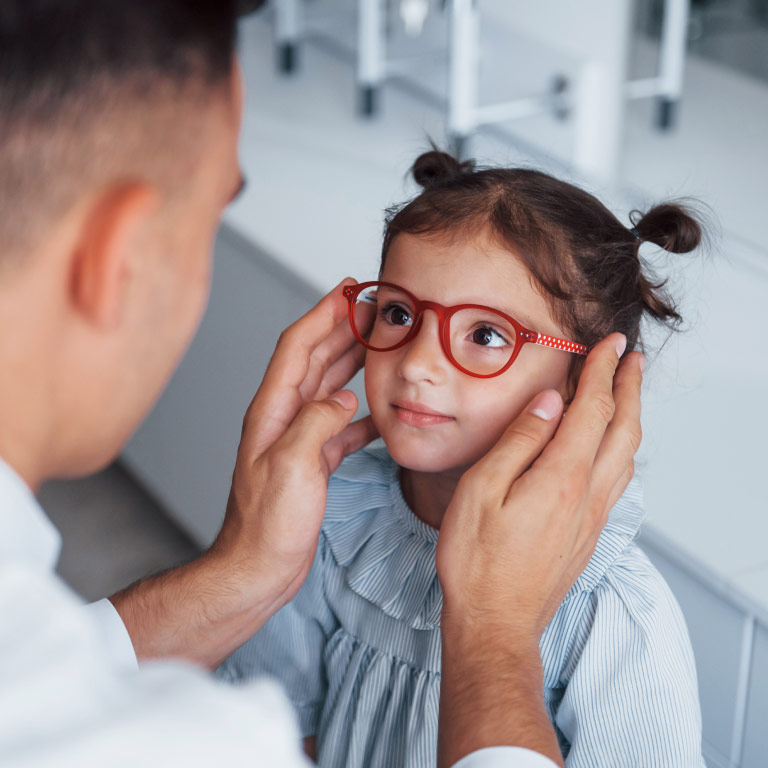
Parents can help by choosing a comfortable, appropriately sized frame and encouraging consistent wear according to the ophthalmologist's recommendation.
What If the Spectacles Keep Slipping?
A slipping frame may indicate that:
- The frame is too large
- The temples need adjustment
- The bridge does not fit correctly
- The frame has become distorted
A proper fitting can improve comfort and make it easier for the child to wear the spectacles consistently.
Eye Health and Screen Use in Children
Children increasingly spend time using:
- Smartphones
- Tablets
- Computers
- Televisions
- Gaming devices
Extended near work and screen use can contribute to visual discomfort.
- Take regular breaks
- Avoid holding screens extremely close
- Spend appropriate time outdoors
- Maintain comfortable lighting
- Blink regularly
- Follow the viewing-distance guidance appropriate for their device
Screen habits should be considered as part of overall visual health rather than treating every screen-related complaint as a refractive problem.
Can Outdoor Time Help Children With Myopia?
Spending time outdoors is associated with a lower risk of developing myopia in children.
Encouraging children to spend regular time outdoors can therefore be a useful part of healthy visual habits.
However, outdoor activity does not replace an eye examination or treatment when a child already has a vision problem.
When Should Parents Arrange a Follow-Up?
Follow-up timing depends on the child's condition.
A child may need more frequent review when there is:
- Progressive myopia
- Amblyopia under treatment
- Squint
- Significant refractive error
- A recent change in spectacle prescription
- Another diagnosed eye condition
Parents should follow the review schedule recommended by the ophthalmologist.
What Should Parents Bring to a Pediatric Eye Appointment?
It can be helpful to bring:
- Current spectacles
- Previous spectacle prescriptions
- Earlier eye reports
- Previous treatment records
- School vision-screening reports
- Information about family eye history
- Details of any symptoms noticed at home
Parents should also mention any changes in school performance that appear to be associated with vision.
How Can Parents Help Children Prepare for an Eye Examination?
Parents can make the appointment easier by explaining that the doctor will simply check how well the child can see.
For younger children:
- Bring a familiar toy if appropriate
- Avoid creating anxiety about the examination
- Explain the process in simple language
- Tell the child that different lights or pictures may be shown
A calm approach can make it easier for the child to cooperate during testing.
Pediatric Eye Care in Thiruvallur
Parents looking for a pediatric eye doctor in Thiruvallur or children's eye check-up in Thiruvallur can seek an age-appropriate eye examination when they notice concerns about their child's vision or eye alignment.
At Deepam Eye Hospital, Thiruvallur, parents can discuss concerns related to:
- Children's vision
- Refractive errors
- Spectacle requirements
- Amblyopia
- Squint
- Other childhood eye concerns
Common Childhood Eye Problems and Their Management
Children can develop different types of eye and vision problems. The appropriate treatment depends on the child's age, the underlying condition and the effect on visual development.
Management may include:
- Observation and regular monitoring
- Prescription spectacles
- Amblyopia treatment
- Squint management
- Myopia monitoring and management
- Treatment of underlying eye conditions
- Surgical treatment when clinically indicated
A child's treatment plan should be based on an eye examination rather than on symptoms alone.
Pediatric Eye Conditions and Care Options
| Childhood Eye Concern | What Parents May Notice | Possible Management | Why Follow-Up Matters |
|---|---|---|---|
| Myopia | Difficulty seeing distant objects, squinting or sitting close to the screen | Spectacles and appropriate myopia management when indicated | Prescription may change as the child grows |
| Hyperopia | Difficulty with certain visual tasks or focusing | Observation or spectacles depending on the degree and clinical findings | Helps monitor visual development |
| Astigmatism | Blurred or distorted vision | Prescription spectacles when required | Uncorrected significant astigmatism can affect visual development |
| Amblyopia | Often no obvious symptoms; one eye may have poorer vision | Spectacles, patching, prescribed drops or treatment of the underlying cause | Treatment response needs monitoring |
| Squint / Strabismus | Eyes appear misaligned or one eye turns | Spectacles, amblyopia treatment, monitoring or surgery in selected cases | Alignment and binocular vision may need ongoing assessment |
| Childhood cataract | Abnormal pupil appearance or reduced vision | Medical assessment and treatment when indicated | Early management can be important for visual development |
| Eye movement problems | Unusual or involuntary eye movements | Assessment and condition-specific management | Monitoring helps evaluate vision and eye function |
Why Follow-Up Is Important in Pediatric Eye Care
Children's eyes and visual systems continue to develop as they grow.
Follow-up appointments can help monitor:
- Vision in each eye
- Changes in spectacle power
- Eye alignment
- Response to treatment
- Myopia progression
- Amblyopia improvement
- General eye health
A child who appears to be seeing better may still require continued treatment or monitoring.
Parents should follow the review schedule recommended by the ophthalmologist.
Helping Your Child Wear Spectacles Regularly
Consistent spectacle use can be particularly important when glasses have been prescribed to support visual development.
Parents can encourage children by:
- Choosing a comfortable frame
- Ensuring the glasses fit correctly
- Checking that the child wears them as prescribed
- Keeping the spectacles clean
- Teaching the child how to store them safely
- Replacing damaged frames or lenses when necessary
If a child repeatedly removes the glasses, check whether the frame is uncomfortable or poorly fitted.
What Parents Should Avoid
Parents should avoid:
- Using another child's spectacles
- Purchasing prescription glasses without an appropriate examination
- Changing the prescribed power without professional advice
- Stopping amblyopia treatment because vision appears better
- Ignoring a persistent squint
- Assuming that a child will outgrow every eye problem
- Delaying evaluation when there is a sudden change in vision
Children's vision should be assessed according to their individual needs.
Pediatric Eye Care for Children With Family History
Some eye conditions can occur more frequently in families.
Parents should mention a family history of:
- Childhood squint
- Amblyopia
- Significant refractive errors
- Childhood cataract
- Other eye disorders
Family history does not mean that a child will necessarily develop the same condition, but it can be relevant when planning an eye assessment.
When Should Parents Seek Prompt Eye Assessment?
Some symptoms require more than a routine spectacle check.
Parents should arrange an ophthalmic evaluation when a child develops:
- Sudden change in vision
- Sudden eye misalignment
- Eye pain
- Significant redness
- Injury to the eye
- Persistent double vision
- Abnormal pupil appearance
- New unusual eye movements
- Significant light sensitivity
A sudden or severe visual change should be evaluated promptly.
Pediatric Eye Care and Children's Confidence
Children may sometimes feel uncomfortable wearing spectacles, particularly when they are the only child in their group who needs glasses.
- Allowing the child to participate in frame selection
- Choosing a comfortable design
- Explaining why the glasses are needed
- Avoiding negative comments about wearing spectacles
- Encouraging consistent use
Making spectacles part of the child's normal routine can help improve acceptance.
Pediatric Eye Care and Sports
Children who participate in sports should have eyewear appropriate to their activities when recommended.
Parents should consider:
- Secure frame fitting
- Appropriate protective eyewear when required
- Avoiding ordinary spectacles for activities where specialised eye protection is necessary
Sports involving potential eye injury may require protective eyewear designed for that activity.
Eye Safety for Children
Parents can reduce avoidable eye injuries by teaching children to:
- Avoid playing with sharp objects near the eyes
- Handle chemicals carefully
- Wear appropriate eye protection during activities that carry an eye-injury risk
- Avoid aiming toys or projectiles toward another person's face
- Inform an adult immediately after an eye injury
Any significant eye injury should be assessed appropriately rather than relying only on whether the child appears comfortable afterward.
Pediatric Eye Care in Thiruvallur at Deepam Eye Hospital
Parents searching for pediatric eye care in Thiruvallur, children's eye care in Thiruvallur, pediatric eye doctor in Thiruvallur or children's eye check-up in Thiruvallur can seek an ophthalmic evaluation when they have concerns about their child's vision or eye health.
At Deepam Eye Hospital in Thiruvallur, parents can discuss concerns related to:
- Children's vision
- Refractive errors
- Myopia
- Amblyopia
- Squint
- Children's spectacles
- Other pediatric eye concerns
Dr. Vimala
Consultant Ophthalmologist
Dr. Vimala is a Consultant Ophthalmologist with interests in:
Areas of Interest
For children with suspected vision problems, an age-appropriate ophthalmic examination can help identify refractive errors and other eye-health concerns.
Where treatment is required, the management plan should be based on the child's age, examination findings and visual development.
Pediatric Eye Care in Thiruvallur
Where can I get pediatric eye care in Thiruvallur?
Parents looking for pediatric eye care in Thiruvallur can seek an age-appropriate eye examination for their child at Deepam Eye Hospital.
When should a child have an eye examination?
An examination may be appropriate when parents notice squinting, poor distance vision, abnormal eye alignment, difficulty with visual tasks or other concerns about the child's eyes.
What are common eye problems in children?
Common concerns include refractive errors, myopia, hyperopia, astigmatism, amblyopia and strabismus.
What is lazy eye in children?
Lazy eye, or amblyopia, is reduced vision caused by abnormal visual development. It can occur when one eye provides a consistently poorer visual image than the other.
Can lazy eye be treated?
Yes. Treatment depends on the cause and may include spectacles, patching, prescribed eye drops or treatment of an underlying eye condition.
Does every child with a squint need surgery?
No. Some children can be managed with spectacles, amblyopia treatment or monitoring. Surgery may be considered in selected cases.
Can children develop myopia?
Yes. Myopia can develop during childhood and may increase as the child grows.
Why does a child need regular eye check-ups?
Regular examinations can identify changes in vision, spectacle power, eye alignment and visual development.
Should children wear glasses if prescribed?
Yes. When spectacles are prescribed, consistent use according to the ophthalmologist's instructions can be important for clear vision and, in some children, normal visual development.
Can excessive screen use affect children's eyes?
Long periods of screen use can be associated with visual discomfort. Appropriate screen habits, regular breaks and outdoor activity can support healthier visual routines.
Frequently Asked Questions
Signs such as frequent squinting, sitting very close to screens, difficulty seeing the board, head tilting, eye misalignment or persistent visual discomfort may indicate the need for an eye examination.
Yes. Infants can undergo age-appropriate eye assessments, particularly when there are concerns about eye alignment, visual response, pupil appearance or other abnormalities.
Vision screening is designed to identify children who may have a vision problem. A comprehensive eye examination goes further by investigating the cause and assessing the child's eyes in greater detail.
Myopia can be monitored, and appropriate management options may be considered depending on the child's age, prescription and rate of progression.
The interval depends on the child's age, prescription and eye condition. Children with changing prescriptions or ongoing treatment may require more frequent follow-up.
A squint should not simply be assumed to disappear with age. Some forms can change over time, while others require treatment. An ophthalmic assessment can determine the appropriate approach.
Yes. Amblyopia may affect one eye without producing obvious symptoms because the child can rely on the stronger eye.
Check whether the frame fits comfortably and whether the child is experiencing difficulty with the spectacles. If refusal continues, discuss the issue with the eye-care team.
Not every child needs special computer or blue-light glasses. The appropriate prescription should be determined from the child's visual needs and examination findings.
Sudden vision changes, significant eye injury, severe pain, marked redness, sudden eye misalignment or an unusual pupil appearance should receive prompt medical attention.
Pediatric Eye Care in Thiruvallur — Book an Eye Examination
A child's vision can change as the eyes develop, and some problems may not be obvious to parents or the child.
If you are looking for pediatric eye care in Thiruvallur, an appropriate eye examination can help identify vision problems early and determine whether monitoring, spectacles or further treatment is required.
Consult Deepam Eye Hospital in Thiruvallur for an age-appropriate pediatric eye evaluation and discuss your child's specific vision or eye-health concerns.
Contact UsMedical Disclaimer
This page is intended for general educational purposes and does not replace an individual examination by an ophthalmologist. Children's eye conditions vary considerably, and treatment depends on the child's age, examination findings and visual development. Parents should seek professional evaluation for persistent or concerning symptoms rather than attempting to diagnose or treat a child's eye problem at home.
